

Sponsors
To be announced. (TBA)
About GIScience
The Fourteenth International Conference on Geographic Information Science (GIScience 2027) will be held in Shanghai, China, hosted by Tongji University, in collaboration with the State Key Laboratory of Resources and Environmental Information System, Chinese Academy of Sciences, and widely supported by the GIScience academic research communities, governments, and industry partners across China and the world. This will be the first time the GIScience conference is hosted in Asia. The GIScience 2027 is the flagship conference in geographic information science and continues the highly successful conference series started in 2000. Since then it has been hosted in the USA, Canada, Germany, Switzerland, Austria, Poland, UK, Australia, and New Zealand.
The conference regularly attracts about 300~500 international participants from academia, industry, and government to discuss and advance the state-of-the-art in geographic information science. The first day of the conference will be dedicated to Workshops and Tutorials. The main conference will run for an additional three full days and include presentation of peer-reviewed full and short papers, and an abstract track for posters and demo submissions.
GIScience research spans the gamut of interrelated discovery activities related to geographic information from the invention of new computational instruments, the gathering of data via observation or experimentation, and discovery of descriptive generalizations patterns in data through to the creation of explanatory theories and the testing of theories. The GIScience conference series seeks submissions that make fundamental advances to the field through this multifaceted process.
GIScience 2027 welcomes research papers, posters, and demos covering emerging topics and fundamental research findings across all sectors of geographic information science, including (but not limited to) the role of spatial information in geography, computer science, engineering, information science, linguistics, mathematics, cognitive science, and social sciences. We welcome participation from the GIScience community sharing work at various stages of development, including perspectives, work in progress, as well as full research papers for inclusion in the conference proceedings. The conference theme is “GeoAI and Multi-Sensing for a Sustainable Future”.
News:
- 🔔 Sept 10, 2026: The first CFP is sent out!
Important Dates
Full paper submissions
Submission: January 29, 2027 (AoE)
Decision: March 26, 2027
Camera ready version: May 30, 2027
Short paper submissions
Submission: April 2, 2027 (AoE)
Decision: May 7, 2027
Camera ready version: May 30, 2027
Registration
Early bird registration: June 30, 2027
Registration fees
All fees listed below are in Chinese yuan (CNY / ¥).
TBA: Registration link.
Call for Submissions
We will accept three types of submissions for GIScience 2027:
- Proceedings paper submissions [🌍 submission link]
- Abstract submissions [🌍 submission link]
- Demo submissions [🌍 submission link]
A list of potential topics includes (but not limited to):
- ● Theoretical foundations of geographic information science
- ● Geospatial AI and foundation models
- ● Multimodal learning and data fusion
- ● Computational geometry
- ● Spatial cognition, wayfinding and navigation
- ● Uncertainty quantification in GIScience
- ● Visualisation of complex spatio-temporal data
- ● Reproducibility, transparency and explainability in spatial analysis
- ● Ethical issues in GeoAI and spatial data science
- ● Agent-based modelling of spatial phenomena
- ● Spatial optimization and location modelling
- ● GIScience for sustainable cities
- ● GIScience for natural disaster response
- ● GIScience for socio-economic inequalities
- ● GIScience for environment and climate
Proceedings paper submissions
Submissions may include full (~18 pages) and short (~6 pages) research papers and vision papers. Authors are invited to submit papers with a length that is commensurate with the contribution. Long/full research papers will emphasize more mature research, whereas shorter papers are for innovative in-progress research or perspectives (vision). High-quality full paper submissions will be selected for oral presentation at the conference and published in the conference full paper proceedings. Short paper submissions will be reviewed and selected for oral or poster presentations at the conference depending on the quality and topic match. Manuscripts must describe original work that has not been previously published or submitted for review elsewhere. Papers should be written in English and follow the required format.
All paper submissions will be peer-reviewed by at least three members of the international program committee.
🌍 Link for Proceedings Paper submissions: TBA.
GIScience 2027 full paper proceedings will be published in LIPIcs, the Leibniz International Proceedings in Informatics series. LIPIcs volumes are peer-reviewed and published according to the principle of open access, i.e., they are available online and free of charge. Each article is published under a Creative Commons CC BY license, where the authors retain their copyright. Also, each article is assigned a DOI and a URN. The digital archiving of each volume is done in cooperation with the Deutsche Nationalbibliothek/German National Library. A number of high-standing international conferences have already made the move to LIPIcs.
GIScience 2027 short paper proceedings will be published in the GIScience 2027 Zenodo (or a similar open source repository) community, which will provide a unique DOI and persistent link to each contribution.
Formatting instructions
All proceedings paper submissions to GIScience, should follow the LIPIcs instructions for authors and use the LIPIcs LaTeX template. The GIScience review process is double-blind, so please do not include any identifying information in the paper PDF.
Authors who are unfamiliar with LaTeX, but keen to try, are highly encouraged to use Overleaf, an online LaTeX editor that is easy to use and does not require any local installation. Overleaf comes with the LIPIcs class and template pre-loaded. Authors who want to use other text editors should stay close to the sample article's layout for their paper submitted for review. Should their papers be accepted for publication, they must be converted to LaTeX using the LIPIcs LaTeX class and template. Authors are responsible for the conversion of their papers to LaTeX.
Datasets / code repository
We encourage the sharing of open datasets and/or code alongside published proceedings papers to support the FAIR principles of scientific data management.
Abstract submissions
For GIScience 2027, we also welcome 2-page extended abstract submissions. Accepted abstracts will be selected for classic poster presentation. Abstracts provide an opportunity for participants to share work in progress, preliminary results, late-breaking research findings, position statements, or published journal papers.
Abstracts should clearly and concisely convey the essence of new research content, highlighting its contribution to, and its novelty in GIScience. They should provide a brief overview of the context or problem, the main objective, and the approach or methods used. Most importantly, they must lucidly articulate what makes the work original, significant and how it advances knowledge or practice in the field of research.
Please note that the programme committee will assess the abstracts based on their novelty, fit to the conference themes and rigour, so it is important that these aspects are clearly demonstrated.
Submissions should include a 2-page extended abstract.
🌍 Link for Abstract submissions: TBA.
Demos
Demos provide a valuable opportunity to showcase cutting-edge research and receive direct feedback from the research community. Submissions should feature functional systems or platforms built on or extending advanced GIScience and data analytics technologies that go beyond commercial software or basic statistical analysis. Presentation space will be made available for presenting your demo at the conference.
Demo submissions should include a 2-page extended abstract along with visual representations of the demo. Inclusion of a link to a video demo is recommended where applicable.
🌍 Link for Demo submissions: TBA.
Abstract and demo repository
Authors of accepted abstracts and demos will be given the option to archive their submission in the GIScience 2027 Zenodo (or a similar open source repository) community, which will provide a unique DOI and persistent link to each contribution.
Final decisions on acceptance and presentation format will be made by the organizing committee chairs.
Call for Workshops
The call for workshops will open in due course. Details to be announced.
Scholarships
Scholarship opportunities will be announced.
Keynotes
Keynote speakers will be announced.
Location
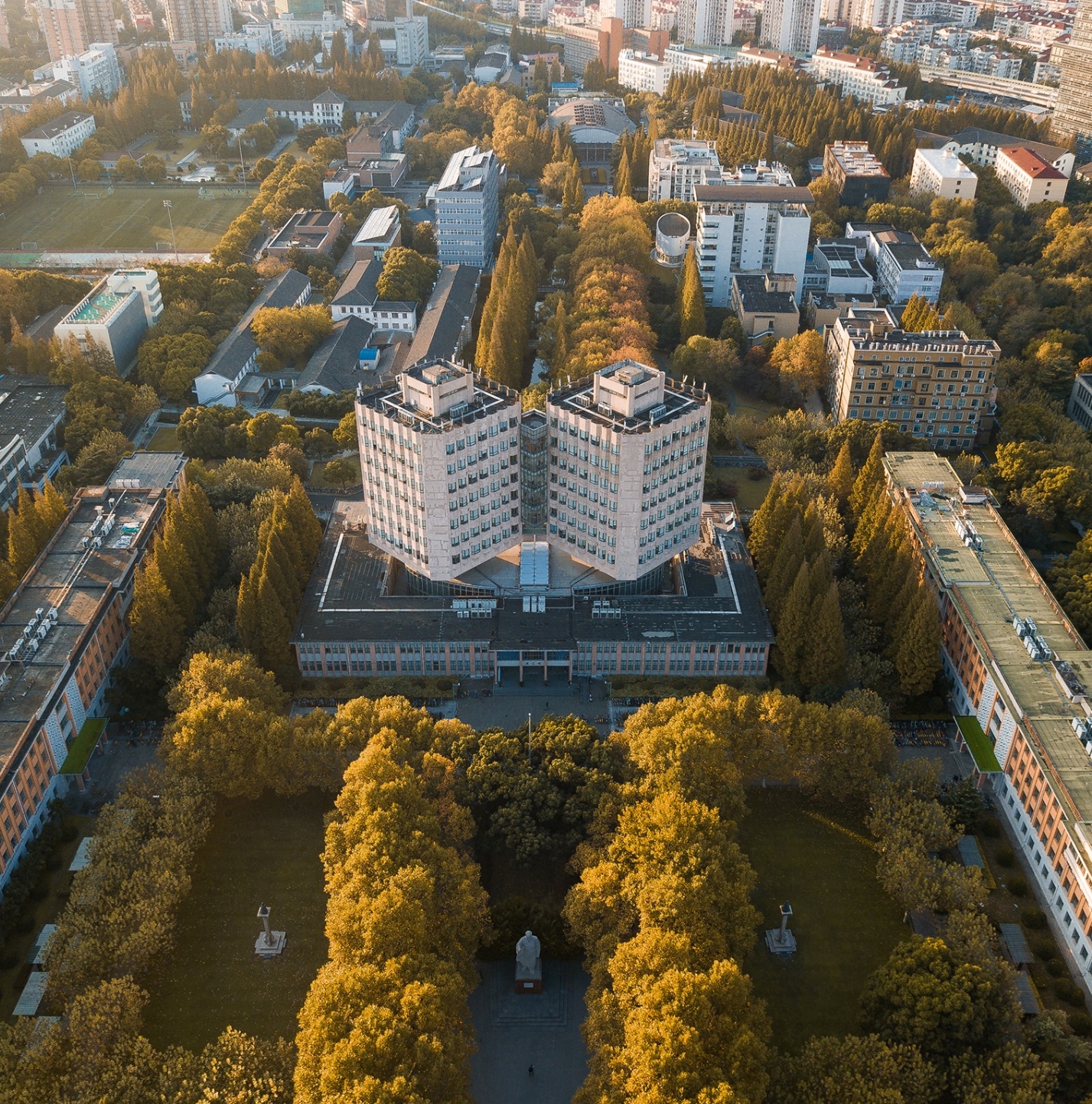
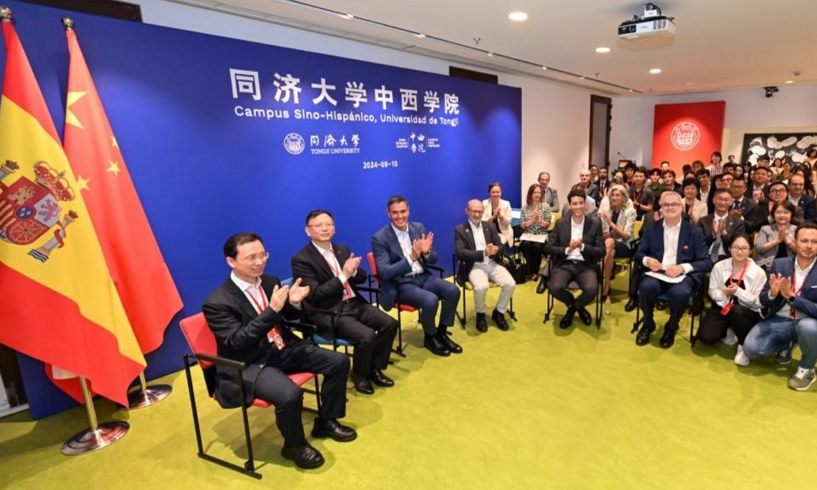
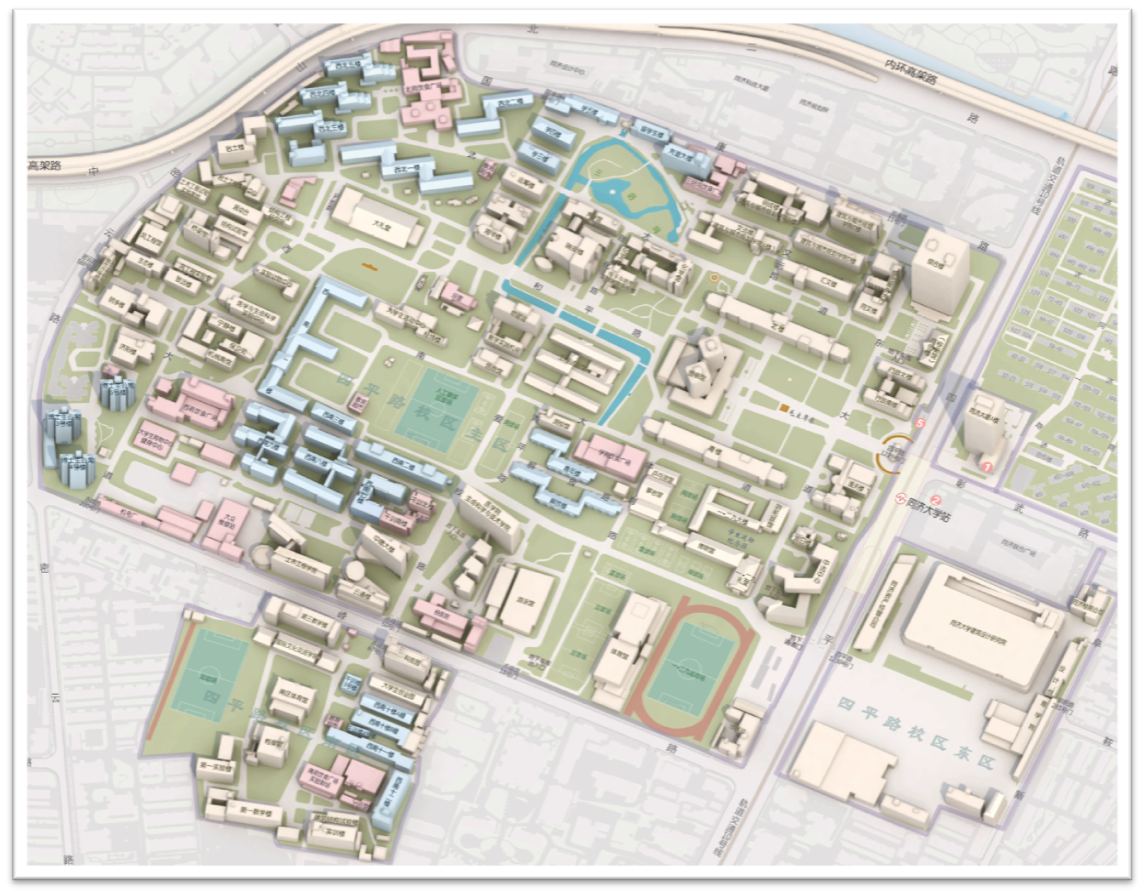
GIScience 2027 will be held at the Tongji University in Shanghai, China.
To learn more about the city of Shanghai click the link.- All
- Tongji Campus
- Shanghai City




Organizers
General Chairs
Song Gao, University of Wisconsin-Madison
Huan Xie, Tongji University
Local Chairs
Wei Huang, Tongji University
Program Committee Chairs
Grant McKenzie, McGill University
Urška Demšar, University of St Andrews
Filip Biljecki, National University of Singapore
Jun Xu, Chinese Academy of Sciences
Workshop/tutorial Chairs
Kai Cao, East China Normal University
Chengzhi Qin, Chinese Academy of Sciences
International Committee Chairs
Youngok Kang, Ewha Womans University, South Korea
Yoshihide Sekimoto, University of Tokyo, Japan
Kamil S. Faisal, King Abdulaziz University, Saudi Arabia
Xintao Liu, Hong Kong Polytechnic University, China
Yunus Serhat Bıçakçı, Marmara University, Turkey
Program Committee
The full international Program Committee will be announced.
GIScience Conference Series
GIScience is the flagship conference in the field of geographic information science. The conference regularly brings together about 300~500 international participants from academia, industry, and government to discuss and advance the state-of-the-art in geographic information science.
Series website